UK Space Industry in Guardian Newspaper

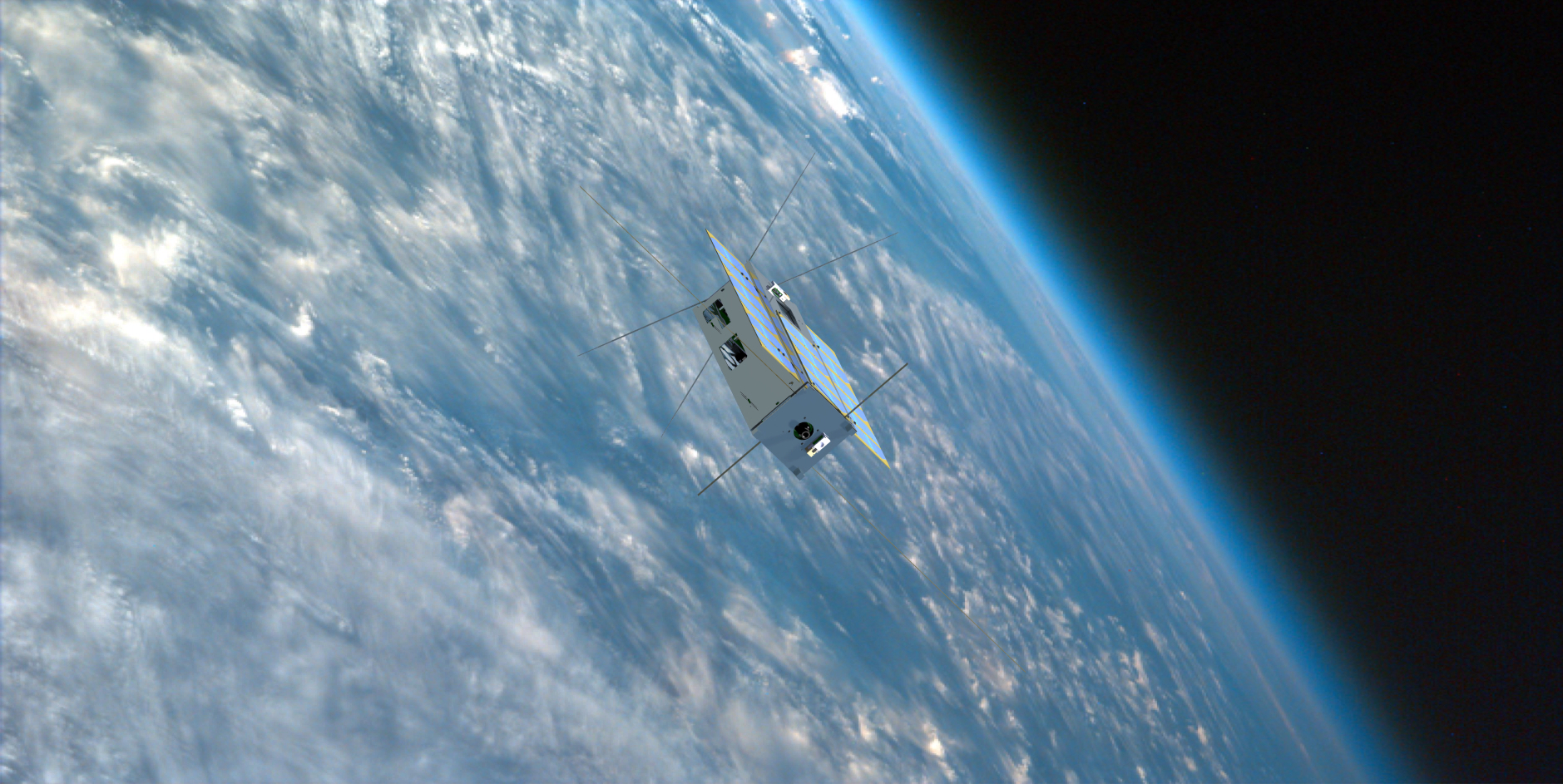
Dr Chris Bridges M6OBC / 2E0OBC working on STRaND-1 - Image credit Surrey Space Centre

Dr Chris Bridges M6OBC / 2E0OBC working on STRaND-1 – Image credit Surrey Space Centre

The Guardian interviewed radio amateur Dr. Chris Bridges 2E0OBC for their story on the growing UK space industry.

Chris 2E0OBC worked on the Surrey Space Centre’s STRaND-1 spacecraft which carries an amateur radio payload. The newspaper also interviewed Steve Greenland, Senior Systems Engineer at Clyde Space, who worked on the UKube-1 spacecraft which carries the FUNcube-2 amateur radio transponder.

Read the Guardian article at
http://www.theguardian.com/education/2015/jan/14/the-space-industry-is-growing-and-looking-for-talented-postgrads

Both Steve and Chris have given presentations to the annual AMSAT-UK International Space Colloquium, see the videos from 2014 at https://amsat-uk.org/colloquium/colloquium-2014/presentation-videos/

STRaND-1 https://amsat-uk.org/satellites/digital-satellites/strand-1/

UKube-1 transponder test https://amsat-uk.org/2015/01/05/funcube-2-ukube-1-update/

Video of FUNcube-1 demonstration at IARU-R1 conference

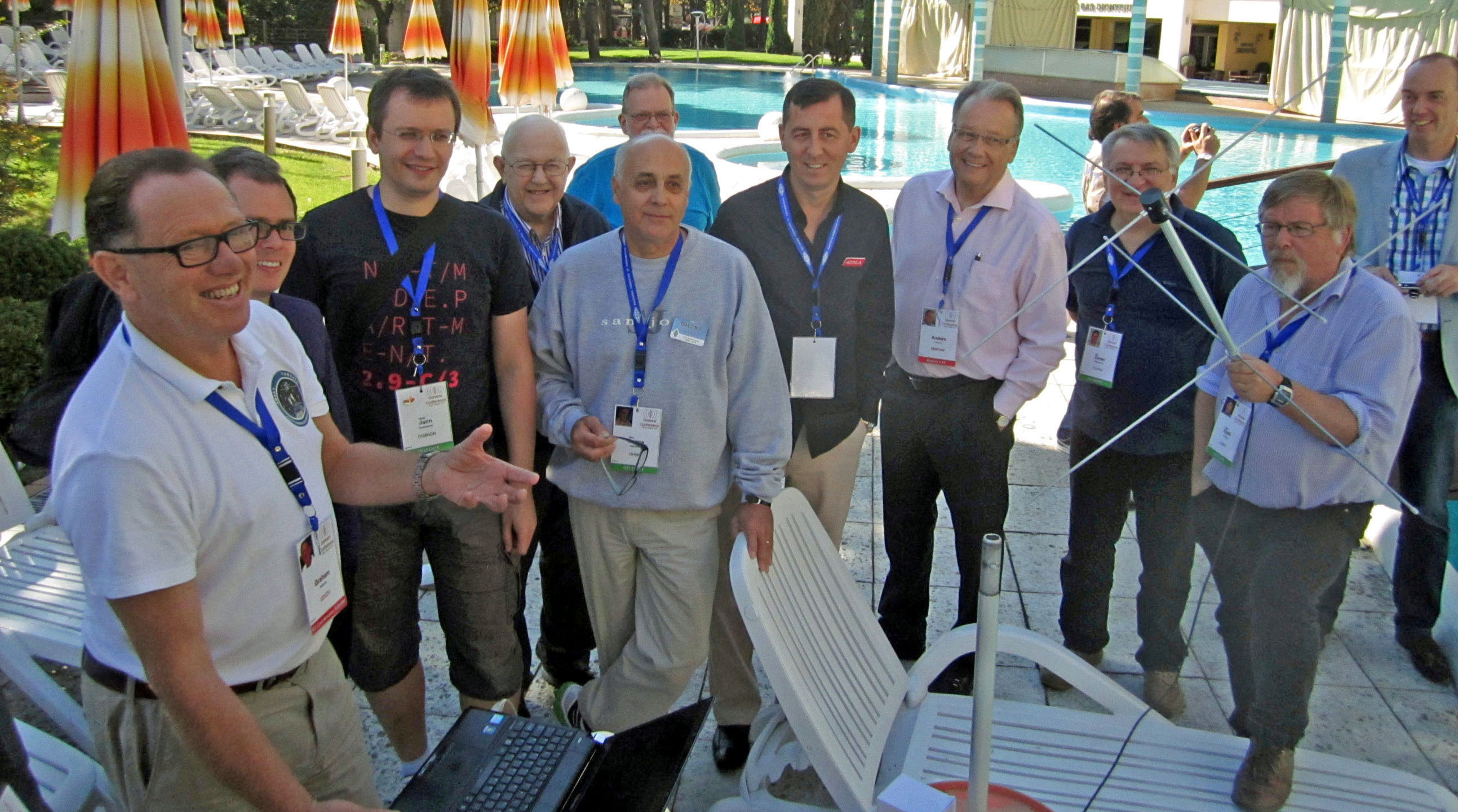
Graham Shirville G3VZV demonstrates FUNcube-1 with Kjetil Toresen LA8KV holding the antenna

Graham Shirville G3VZV demonstrates FUNcube-1 with Kjetil Toresen LA8KV holding the antenna

Riaan Greeff ZS4PR has released a video of the demonstration of the FUNcube-1 (AO-73) CubeSat by Graham Shirville G3VZV to delegates at the IARU Region 1 Conference in September 2014.

Watch the video Graham G3VZV demonstrates FUNcube satellite

Mats SM6EAN has posted a brief report on the Swedish Amateur Radio Society (SSA) website about the FUNcube-1 CubeSat presentation at the IARU Region 1 General Conference in Varna-Albena, Bulgaria.

The following is translated from the original Swedish post.

After the session of the VHF, UHF and Microwave C5 Committee had completed the delegates were given two interesting presentations.

Graham Shirville G3VZV did a poolside demonstration of the FUNcube-1 satellite which was launched in November 2013. Using a computer, FUNcube SDR dongle and a turnstile antenna, held by Kjetil Toresen LA8KV, he received FUNcube-1 and displayed the telemetry data on the computer screen. The satellite’s telemetry beacon on 145.935 MHz was also heard using a handheld SSB receiver.

A presentation was also made about Hamnet which is being expanded, especially in Germany. Hamnet is a high-speed multimedia network and it was discussed whether and how IARU Region 1 could support the expansion of this network.

Post by Mats SM6EAN in Swedish http://www.ssa.se/iaru-reg-1-dag-4/

FUNcube http://FUNcube.org.uk/

FUNcube SDR Dongle http://FUNcubeDongle.com/

FUNcube Yahoo Group https://amsat-uk.org/funcube/yahoo-group/

Dashboard App – Telemetry Decoder http://funcube.org.uk/working-documents/funcube-telemetry-dashboard/

Data Warehouse – Telemetry Archive http://warehouse.funcube.org.uk/

Hamnet http://hamnetdb.net/

IARU Region 1 Conference documents and pictures http://iarur1con2014.bfra.bg/

UK’s Sarah Brightman starts space flight training

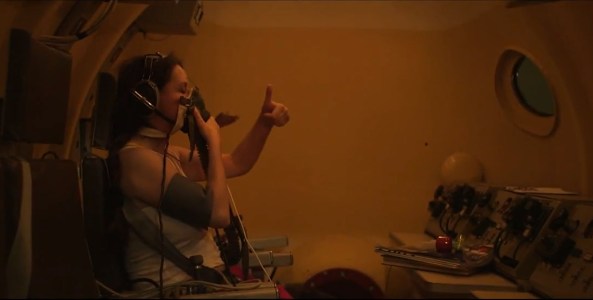
Private Spacefarer Sarah Brightman Undergoes Medical Tests

Private Spacefarer Sarah Brightman Undergoes Medical Tests

Sarah Brightman hopes to launch to the International Space Station (ISS) for a 10 day mission on September 1, 2015. If the launch were to take place as expected she would become the UK’s second astronaut, the first was Helen Sharman GB1MIR on May 18, 1991. Tim Peake KG5BVI is expected to launch in November 2015.

The TASS news agency reported that the UK’s Sarah Brightman will start training for her ISS mission in January 2015.

Sarah Brightman will train in Russia’s Star City. “She will arrive here on Wednesday, January 14, and will start her training the following day,” the press service of the space training facility told TASS. UPDATE: start of training was postponed until January 19.

Her flight is scheduled for September 1-11, 2015 and she is expected to spend 10 days at the ISS.

Sarah Brightman is paying $52 million for the flight considerably more than the $20 million that Iranian-American engineer Anousheh Ansari paid for her mission to the ISS in 2006, highlighting the dramatic escalation in launch charges in recent years.

Sarah Brightman - DreamchaserSarah started her singing career in the 1970’s and had hits such as “I Lost My Heart to a Starship Trooper” and “Love in a UFO”. She is now a classical crossover artist.

In 2012 in conjunction with Virgin Galactic, The Brightman STEM Scholarship program (science, technology, engineering, and mathematics) was launched to help young women in the US pursue STEM education across their four year college careers.

Her album, “Dreamchaser” was released on January 22, 2013. She said “I don’t think of myself as a dreamer. Rather, I am a dream chaser, I hope that I can encourage others to take inspiration from my journey both to chase down their own dreams and to help fulfill the important UNESCO mandate to promote peace and sustainable development on Earth and from space. I am determined that this journey can reach out to be a force for good, a catalyst for some of the dreams and aims of others that resonate with me.” She intends to become the first professional musician to sing from space.

It is not yet known if she will make any amateur radio contacts while on the ISS. In 1991 the first UK astronaut Helen Sharman was issued with a special callsign GB1MIR by the Radiocommunications Division of the Department of Trade and Industry (DTI). She was then able to contact radio amateurs on Earth during her stay on the MIR space station. The RSGB has reported that the UK communications regulator Ofcom will make the callsign GB1SS available for issue to UK astronauts who wish to operate from the ISS.

Read the TASS story at http://itar-tass.com/en/non-political/770688

You can sign up to receive updates on Sarah’s mission at http://www.sarahbrightman.com/

Wiki – Sarah Brightman http://en.wikipedia.org/wiki/Sarah_Brightman

Space Adventures http://www.spaceadventures.com/

International Space Station - Image Credit NASA

International Space Station – Image Credit NASA

OGMS-SA CubeSat to provide FM transponder

OGMS-SA CubeSat - Paris-Est Creteil University

OGMS-SA CubeSat – Paris-Est Creteil University

OGMS-SA is a 3U CubeSat being developed by students at the Paris-Est Creteil University as part of the QB50 constellation.

The purposes of this CubeSat include upper atmosphere science; radio communication experiments; technology demonstrator; education, training and outreach.

Additionally it will provide an FM voice transponder for amateur use.

Planning to use VHF uplink and UHF downlink with 9k6 FX25 GMSK modulation. A downlink of 437.545 MHz has been coordinated.

OGMS-SA CubeSat http://www.esep.pro/-CubeSat-OGMS-SA-En-construction-.html

Source IARU Satellite Frequency Coordination http://www.amsat.org.uk/iaru

QB50 CubeSat Launch Contract Signed
https://amsat-uk.org/2014/01/28/qb50-cubesat-launch-contract-signed/

Shin’en2 spacecraft designated as Fuji Oscar 82

Shin'en2 on left - ARTSAT2:DESPATCH on right

Shin’en2 (FO-82) on left – ARTSAT2:DESPATCH (FO-81) on right

William A. (Bill) Tynan, W3XO, OSCAR Number Administrator has conferred on Shin’en2 the designation Fuji OSCAR-82 or FO-82.

Shin'en 2 (FO-82) also known as Abyss 2

Shin’en 2 (FO-82) also known as Abyss 2

In reply to Seiji Fukushima’s, JH6RTO, request for an OSCAR number, Bill said, “I along with all in AMSAT-NA and the world’s Amateur Radio satellite community congratulate you and all involved with Fuji OSCAR-82 and trust that it will fulfill all of its mission objectives. FO-82 joins an illustrious line of Fuji spacecraft built and launched by Japan.”

Shin’en2 is a 17 kg satellite measuring 490×490×475 mm built by students at Kagoshima University in Japan. The aims of the mission were:
• To establish communication technologies with a long range
• To establish a new technology of the ultra-light-weight satellite with UHF downlinks

The orbit is quite different from the previous satellites. Shin’en2 headed to a deep space orbit between Venus and Mars. The inclination is almost zero, which means it will stay in the Earth’s equatorial plane.

The distance from the Sun will be between 0.7 and 1.3 AU. An Astronomical Unit (AU) is 149,597,871 km.

Shin’en2 IARU coordinated frequencies listed as:
• 437.505 MHz CW beacon
• 437.385 MHz Telemetry

Shin’en2 launched in the 4th quarter of 2014 with another amateur radio satellite, ARTSAT2:DESPATCH, on a H-IIA rocket with the asteroid explorer Hayabusa 2 as the main payload.

Kagoshima University satellite development team
http://tinyurl.com/Kagoshima-Satellite

Shin’en2 English website http://www.shin-en2.jp/index_E.html

Shin’en2 project website http://kit-okuyama-lab.com/en/sinen2/sinen2-outline/

Japanese Asteroid Mission To Carry Amateur Radio
https://amsat-uk.org/2014/09/01/japanese-asteroid-mission-to-carry-amateur-radio/

OSCAR Numbers Policy http://www.amsat.org/?page_id=2478

Thanks to AMSAT News Service (ANS)

Jan 15 Talk – A Beginners Guide to Amateur Satellites

David Bowman G0MRF giving one of his popular FUNcube satellite presentations

David Bowman G0MRF giving a previous FUNcube talk at the Sutton & Cheam Radio Society

David Bowman G0MRF will be giving a presentation titled ‘A Beginners Guide to Amateur Satellites’ at the Sutton & Cheam Radio Society (SCRS) on Thursday, January 15 at 8 pm, visitors are welcome.

The SCRS newsletter says:

Last February, we had an excellent and well-attended talk by David Bowman – GØMRF on the topic of ‘The FUNcube Satellite Project’. The technology of satellite communication seems to have caught the interest of many of our members, but what has been missing at our meetings so far has been an illustrated talk on the basics of getting started.

David will be paying us a return visit on Thursday 15th January with a talk entitled ‘A Beginners Guide to Amateur Satellites’. This will cover the development of amateur satellite communications along with plenty of information on the necessary equipment to get started and the techniques employed.

Some amateur satellite operators have extremely sophisticated and no doubt expensive station set-ups,
however, it is possible to start off at a very basic level. All will be revealed at this meeting.

It’s always good to see a good turn-out of members and visitors at our meetings, so hopefully we can ‘kickoff’ 2015 with a packed clubroom. See you all on Thursday 15th.

John – GØBWV

The meeting will be held in the Vice Presidents’ Lounge, Sutton United Football Club, The Borough Sports Ground, Gander Green Lane, Sutton, Surrey, SM1 2EY at 7:30 pm for 8:00 pm.

Map http://scrs.org.uk/location/

Sutton & Cheam Amateur Radio Society http://scrs.org.uk/

Download the Powerpoint slides A_beginners_guide_ to_amateur_radio_satellites