KySat-2 Kentucky Space-Blog

Twyman Clements, Space Systems Engineer at Kentucky Space, has agreed to provide regular updates to blog readers on the progress of the next satellite now that the X-ray hunter, “CXBN,” has flown. His first installment can be read below. Enjoy.
‘Wayne’

Here at Kentucky Space we are furiously at work on the consortium’s next satellite. While our engineering work is moving along on KySat-2 (drawing below) we wanted to start “K2 Tuesday’s” to update readers on the progress of the spacecraft, as well as introduce them to basic satellite systems and some of the people who will be working on it. I wanted to start with a little history of Kentucky Space’s orbital satellite program.

Kentucky Space began as a consortium of universities within the Commonwealth of Kentucky in 2006. From the beginning students worked on KySat-1, the state’s first orbital satellite. Through the next few years the students and university faculty learned the in’s and out’s of spacecraft design, testing and communication. KySat-1 (pictured on clean room bench, Above) was eventually selected as one of three primary satellites on NASA’s first ELaNa mission which was eventually launched in March of 2010, along with the NASA GLORY spacecraft. KySat-1 was a one-unit (1U) CubeSat that rode to orbit as a secondary payload. Sadly, due to a launch anomaly with the rocket, none of the payloads made orbit. But Kentucky Space and its partner institutions have continued to work, and Morehead State University’s “CXBN” satellite was launched just weeks ago.

KySat-2, or “K2,” will fulfill the original mission of KySat-1, but will incorporate even better components and the added knowledge acquired the past few years by Kentucky Space. K2 will include an attitude determination system, which will also serve as a camera that will take pictures of both the earth and star fields. Additionally the spacecraft will transmit telemetry in the amateur radio spectrum allowing HAM radio operators to capture it and check the health of the spacecraft as it makes its way around the globe every 90 or so minutes.

Currently KySat-2 is serving as a backup secondary payload on two NASA missions slated for launch in Q3 of 2013. This means delivery dates to the launch site in April or May of 2013. The satellites subsystem are currently being designed with prototypes being ordered this week. Within the next six weeks we will be putting together a FlatSat version of KySat-2 to test communication between its subsystems and refining the spacecraft software. We will keep you up to date through the entire process.


I’ll be back next Tuesday with another update. Until then,

Twyman Clements, Space Systems Engineer, Kentucky Space

http://www.kentuckyspace.com/


First picture from FITSAT-1 on 5840.0 MHz

First picture from FITSAT-1 on 5840.0 MHz showing the solar panels on the ISS

When the FITSAT-1 CubeSat was deployed from the International Space Station on October 4 it took a picture using the on-board camera. On Friday, October 19 UT, the team successfully downloaded the picture using the high-speed 115.2 kbps data transmitter on 5840.0 MHz.

Continue reading →

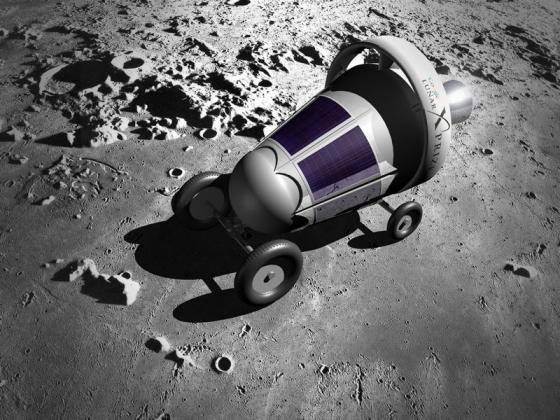
Synergy Moon Google Lunar X-Prize Team

Space Tech Garage – Image Credit Synergy Moon

Radio amateur Gerard Auvray, F6FAO, is a member of the Synergy Moon team that aims to develop and land a rover on the moon.

Synergy Moon are currently building a communications and mission control infrastructure, starting with a NanoSat that will test some of the communications and rover hardware.

Continue reading →

October SatMagazine Now Available

The October issue of the free publication SatMagazine has articles on the Aeneas and Firefly CubeSats as well as a Builder’s Guide To Inexpensive Space Access.

In this issue:
Page 16 – Aeneas CubeSat
Page 40 – Satellite Networks For Education
Page 56 – Firefly CubeSat
Page 60 – A Builder’s Guide To Inexpensive Space Access By Randa Relich Milliron, CEO, Interorbital Systems

Download the October 2012 SatMagazine at http://www.satmagazine.com/2012/SM_Oct2012.pdf

SatMagazine http://www.satmagazine.com/

FITSAT-1 Update

FITSAT-1 plans to use LED’s to signal in Morse code

The amateur radio CubeSat FITSAT-1 (aka NIWAKA) carries an Optical Communications experiment that aims to write Morse Code across the night sky. The satellite is fitted with a bank of high power LEDs that will be driven with 200W pulses to produce extremely bright flashes that may be visible to the unaided eye.

FITSAT-1 was deployed from the International Space Station (ISS) at 15:44 UT on Thursday, October 4 along with F-1 and TechEdSat.

On Sunday, October 7 Takushi Tanaka JA6AVG provided this update:

We have received a lot of signal and telemetry reports from amsat members. All reports show FITSAT-1 starts working and sound. Thank you very much for your help.

We will examine movements, temperatures, and battery states of FITSAT-1 during these 10 days, and start experiments of 5.8GHz transmission and flashing LEDs.

I will announce the experiments on my web-page http://www.fit.ac.jp/~tanaka/fitsat.shtml

As well as 437.250 MHz and 437.445 MHz (both +/- 10 kHz Doppler) this innovative satellite can also transmit on 5840.0 MHz (+/- 134 kHz Doppler).

Continue reading →

Euroluna Google Lunar X-Prize Quarterly Update

Euroluna

Original design of the Euroluna Romit3 Lunar Rover – Image courtesy of Andrew Collis/X-Prize Foundation

The President of Euroluna, Palle Haastrup OZ1HIA, provides an update on the progress of the Euroluna Google Lunar X-Prize team who are aiming to land a rover on the Moon.

Their first amateur radio spacecraft Romit-1 is a 2U CubeSat that will transmit on 437.505 MHz using 1200 bps AX.25 packet radio. It will be fitted with an Ion Motor and if everything goes well it should, after a year, be able to raise its orbit from 310 km to 700 km.

Continue reading →