FITSAT-1 Update

FITSAT-1 plans to use LED’s to signal in Morse code

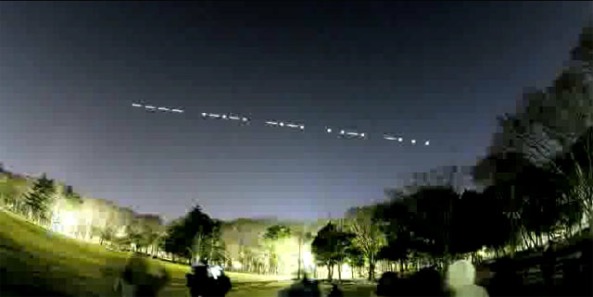
The amateur radio CubeSat FITSAT-1 (aka NIWAKA) carries an Optical Communications experiment that aims to write Morse Code across the night sky. The satellite is fitted with a bank of high power LEDs that will be driven with 200W pulses to produce extremely bright flashes that may be visible to the unaided eye.

FITSAT-1 was deployed from the International Space Station (ISS) at 15:44 UT on Thursday, October 4 along with F-1 and TechEdSat.

On Sunday, October 7 Takushi Tanaka JA6AVG provided this update:

We have received a lot of signal and telemetry reports from amsat members. All reports show FITSAT-1 starts working and sound. Thank you very much for your help.

We will examine movements, temperatures, and battery states of FITSAT-1 during these 10 days, and start experiments of 5.8GHz transmission and flashing LEDs.

I will announce the experiments on my web-page http://www.fit.ac.jp/~tanaka/fitsat.shtml

As well as 437.250 MHz and 437.445 MHz (both +/- 10 kHz Doppler) this innovative satellite can also transmit on 5840.0 MHz (+/- 134 kHz Doppler).

Continue reading

Assembled Amateur Radio 2m Filtered Pre-Amps Now Available

This is the completely assembled version of the 2m filtered preamplifier from G0MRF. The connectors supplied are a high quality PTFE insulated reduced flange Ntype for the connection to the antenna and a chassis mounted female BNC for the RF output to the receiver, this also carries the 5 V DC input from a FUNcube Dongle or the DC supply from an external bias tee or radio. *** LIMITED AVAILABILITY *** When they are gone, they are gone!

Read the Measurement Report here.

Buy the assembled 144 MHz pre-amp from the AMSAT-UK shop at
http://shop.amsat.org.uk/shop/category_11/G0MRF-Filtered-PreAmps.html

The pre-amp is also available in kit form, read the Construction Notes here.

FITSAT-1 received with 1/4 wave antenna and FUNcube Dongle SDR

FUNcube Dongle Pro+ LF/MF/HF/VHF/UHF Software Defined Radio

Howard Long G6LVB has released a video showing reception of the FITSAT-1 CubeSat 437.250 MHz CW beacon using just a 1/4 wave antenna on a baking tray sat on his balcony in London. The receiver was a FUNcube Dongle Pro+ LF/MF/HF/VHF/UHF Software Defined Radio (SDR). No preamp or external filtering were used.

Continue reading

NASA Release Amateur Radio CubeSat Deployment Pictures

Amateur Radio CubeSats TechEdSat, F-1 and FITSAT-1 pass the ISS solar panels

NASA have released photographs of the amateur radio CubeSats TechEdSat, F-1 and FITSAT-1 taken by an Expedition 33 crew member on the International Space Station (ISS).

Continue reading

ISS Amateur Radio CubeSats Deployed

Kibo Robot Arm CubeSat Deployment

Kibo Robot Arm CubeSat Deployment – Image Credit JAXA

On October 4, 2012 five CubeSats were successfully deployed from the International Space Station (ISS). The first pod containing RAIKO and WE-WISH was deployed at 1437 UT while the second pod containing FITSAT-1, F-1 and TechEdSat deployed at 1544 UT. Pictures can be seen at http://www.uk.amsat.org/?p=10804

October 4 was also the 55th anniversary of the launch of the first satellite Sputnik 1. Videos of Sputnik are here.

Four of the CubeSats carry Amateur Radio payloads, they are TechEdSat, F-1, FITSAT-1, and WE-WISH. As of Oct 5, 1015 UT signals had been reported from WE-WISH and FITSAT-1 as well as weak signal reports for TechEdSat.

ISS CubeSat Frequency Chart – Image Credit Mike Rupprecht DK3WN

Continue reading

Euroluna Google Lunar X-Prize Quarterly Update

Euroluna

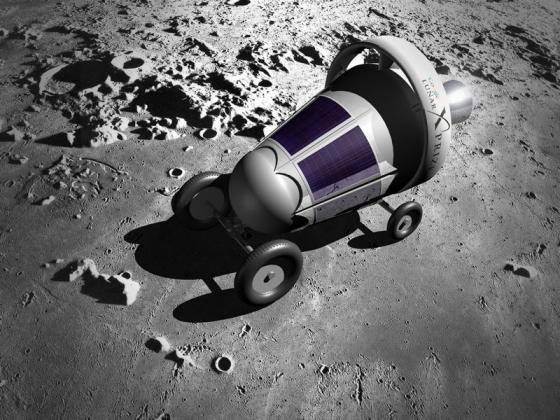
Original design of the Euroluna Romit3 Lunar Rover – Image courtesy of Andrew Collis/X-Prize Foundation

The President of Euroluna, Palle Haastrup OZ1HIA, provides an update on the progress of the Euroluna Google Lunar X-Prize team who are aiming to land a rover on the Moon.

Their first amateur radio spacecraft Romit-1 is a 2U CubeSat that will transmit on 437.505 MHz using 1200 bps AX.25 packet radio. It will be fitted with an Ion Motor and if everything goes well it should, after a year, be able to raise its orbit from 310 km to 700 km.

Continue reading