ÑUSAT-1 SSB/CW Transponder Satellite

LU Satellite Experiment Payload ÑUSAT-1, carrying an amateur radio 435/145 MHz linear transponder and a 436 MHz telemetry beacon, was launched May 30, 2016 at 0317 UT on a CZ-4B rocket from Taiyuan into 500 km 97 degree inclination  polar orbit. With ÑUSAT-1 on the launch was its sister satellite ÑUSAT-2 which has a 437 MHz beacon.
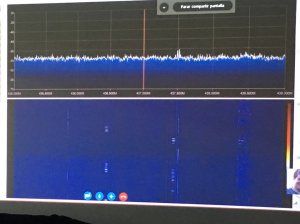
ÑuSAT-1 and ÑuSAT-2 beacons

ÑuSAT-1 and ÑuSAT-2 beacons

UPDATE May 30, 2016 at 1300 UT: ÑUSAT-1 and ÑUSAT-1 launched and deployed successfully, signals reported from both telemetry beacons. Satellogic reports “All Systems: Nominal”.

AMSAT-LU reports both satellites are sending strong TLM on 436.445/437.445 at 9K6/19K2 GFSK. During first few days they are being stabilized, after that the U/V linear transponder will be activated on ÑUSAT-1. A notice will be given on the AMSAT Bulletin Board (AMSAT-BB).

AMSAT Argentina say:

As we quoted when the announcement of the launching of this experiment, Amsat Argentina has been working for several years to keep alive the dream of many Argentine amateurs to get back into Space with their own satellite as a follow-on of the legendary 1990’s LUSAT-1, reaping the benefits of Technological advancement of our days.

We believe technical activities and developments of experiments in near space share the same goals: preserving the human group, enhancing their capabilities as well as disseminate and guiding the education and development of the activity, meanwhile contributing to Space available resources.

Our agreement with Satellogic Enterprises, which already launched three low orbit satellites: Captain Beto, Manolito y Tita, two of which transmit telemetry and data currently in UHF identifying themselves with callsign LU7AA, allowed us to ride a linear analog amateur radio transponder and corresponding antenna aboard one of their next satellite, ÑUSAT-1

AMSAT-LU provides simultaneously, support for this mission and the ÑUSAT-2 mission, by operating one of the control stations at Tortuguitas, Prov. Of Bs.As.

The experiment Amsat-LU developed, evolved from original design of our colleague and partner William, PE1RAH, while electronic adaptation, mechanical and software was made by the LU Satellite Experiment group, mounted on a 10 x 10 centimeters radiating plate, in which components of the power supply as well as a duplexer and dual band antenna where also incorporated.

This set was installed on the Ñusat-1 bus, which supplies power and becomes part of several other experiments this satellite will make.

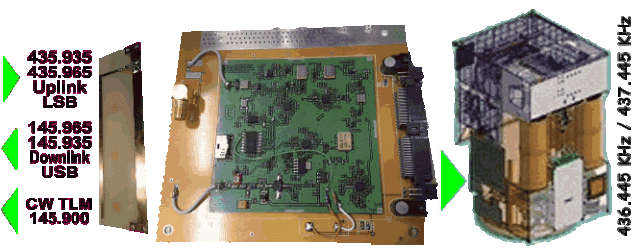
The transponder receives UHF which is broadcasted in VHF, has a bandwidth of 30 kHz. with an output power of 250 mW.

435.935 ~ 435.965 are LSB/CW uplink passband
145.965 ~ 145.935 are USB/CW downlink passband
145.900 Basic CW Telemetry

Telemetry beacons:
ÑUSAT-1 436.445 MHz 9k6 GFSK
ÑUSAT-2 437.445 MHz 9k6 GFSK

73 AMSAT ARGENTINA

http://www.amsat.org.ar
https://www.facebook.com/Amsat.LU
http://lusex.org.ar
http://amsat.org.ar/pass.htm
info [at] amsat.org.ar

CubeSats with Amateur Radio payloads deploy from ISS

MinXSS-1 and CADRE CubeSats deployed by Tim Peake KG5BVI / GB1SS on May 5, 2016

MinXSS-1 and CADRE CubeSats deployed by Tim Peake KG5BVI / GB1SS on May 5, 2016

Monday, May 16, 2016 saw the deployment of five CubeSats carrying amateur radio payloads.

STM students building antenna to receive data from STMSat-1 - Credit Saint Thomas More Cathedral School

STM students building antenna to receive signal from STMSat-1 – Credit Saint Thomas More Cathedral School

UK astronaut Tim Peake KG5BVI / GB1SS deployed the first two satellites MinXSS-1 and CADRE from the Japanese ISS Kibo module at 1005 UT. The Slow Scan Television (SSTV) satellite STMSat-1, built by Elementary students at Saint Thomas More Cathedral School (STM), was deployed along with the pair of NODES CubeSats built by students at Santa Clara University at 1440 UT.

STM is thought to be the first Elementary school to build their own satellite, even Pre-Kindergarten, Kindergarten, and First Grade students were involved in the project. It is designed to transmit a Robot36 SSTV signal.

UPDATE May 18: STMSat-1 Twitter feed suggests listening 437.000 MHz FM.

UPDATE May 20: STMSat-1 Twitter feed suggests listening 437.800 MHz FM.

CubeSat Frequency Chart - Credit Mike Rupprecht DK3WN

CubeSat Frequency Chart – Credit Mike Rupprecht DK3WN

IARU Coordinated Frequencies:
http://amsat.org.uk/iaru
• STMSat-1 437.800 MHz FM SSTV Robot36
• MinXSS-1 437.345 MHz 9600 bps FSK
• CADRE 437.485 MHz 9600 bps FSK and 3.404 GHz
• NODES 437.100 MHz 1200 bps AX.25 and 2401.2-2431.2 MHz 115.2 kbps spread spectrum FSK

Watch NASA video on the First Elementary School Built CubeSat

How Did 400 Grade School Students Built A Nano-Satellite?
http://jewelbots.tumblr.com/post/134465599599/how-did-400-grade-school-students-built-a

First CubeSat Built by an Elementary School Deployed into Space
https://www.nasa.gov/feature/first-cubesat-built-by-an-elementary-school-deployed-into-space

Deployment of two NODES satellites and STMSat-1

Deployment of two NODES satellites and STMSat-1

STMSat-1
https://twitter.com/STMSAT11
https://www.facebook.com/stmsat1/
https://www.facebook.com/groups/491135804399695/
http://www.stmsat-1.org/

MinXSS CubeSat http://lasp.colorado.edu/home/minxss/

CADRE CubeSat http://exploration.engin.umich.edu/blog/?page_id=961

NODES mission dashboard http://nodes.engr.scu.edu/

School SSTV CubeSat to deploy from ISS
https://amsat-uk.org/2016/03/03/school-sstv-cubesat-to-deploy-from-iss/

MinXSS and CADRE CubeSats ISS Deployment
https://amsat-uk.org/2016/05/14/minxss-cadre-cubesats/

CADRE video – Meet an Aerospace Engineering Student: Prince Kuevor
https://amsat-uk.org/2016/04/21/cadre-cubesat-iss/

Students at Saint Thomas More Cathedral School awaiting deployment of their CubeSat STMSat-1

Students at Saint Thomas More Cathedral School awaiting deployment of their CubeSat STMSat-1

MinXSS and CADRE CubeSats ISS Deployment

University of Michigan CADRE CubeSat

University of Michigan CADRE CubeSat

The MinXSS and CADRE CubeSats, both carrying amateur radio payloads, are set to be deployed from the International Space Station (ISS) on May 16, 2016 between 1000-1100 UT.

MinXSS will be beaconing in the UHF at 437.345 MHz every 9 seconds and will initially be in an orbit very similar to the ISS. We’ll get the TLE identifier in JSpOC labeled ASAP. The CADRE team may send out an email with their frequency information as well. [IARU has coordinated 437.485 MHz and 3.404 GHz for CADRE]

If you hear the MinXSS beacons, we would greatly appreciate it if you’d email us (me and those cc’d) to let us know. We’re still working on beacon decode/forward software that would bring you more in the loop.

For those interested, MinXSS is a science mission to study soft x-ray spectra from the sun. We’ll also be the first to fly the very popular Blue Canyon Technologies XACT attitude determination and control system.

Thanks for your help!

James Paul Mason, PhD
Postdoctoral research associate
MinXSS grad student lead turned co-investigator
University of Colorado at Boulder
Laboratory for Atmospheric and Space Physics

MinXSS CubeSat http://lasp.colorado.edu/home/minxss/

CADRE CubeSat http://exploration.engin.umich.edu/blog/?page_id=961

CADRE video – Meet an Aerospace Engineering Student: Prince Kuevor
https://amsat-uk.org/2016/04/21/cadre-cubesat-iss/

Tomsk-TPU-120 CubeSat celebrates University anniversary

Tomsk-TPU-120 CubeSat - Credit Tomsk Polytechnic University

Tomsk-TPU-120 CubeSat – Credit Tomsk Polytechnic University

The Russian Tomsk-TPU-120 CubeSat is different from other CubeSats – it has a handle!

The 3U CubeSat was launched from Baikonur to the ISS on March 31, 2016 in a Progress-MS-2 cargo vessel. It will be deployed by hand during a future Russian spacewalk (EVA), which is why it has a handle.

The satellite was developed by students at the Tomsk Polytechnic University to test new space materials technology and will be the world’s first space vehicle with a 3D-printed structure.

Tomsk-TPU-120 CubeSat Callsign RS4SIn May 2016 Tomsk Polytechnic University celebrates its 120th anniversary. As part of the celebrations from  0755 UT May 10 until 1005 UT May 11 Tomsk-TPU-120 will be activated in the ISS and will transmit a greeting to Earth inhabitants, recorded by students of the university in 10 languages: Russian, English, German, French, Chinese, Arabic, Tatar, Indian, Kazakh and Portuguese.

The greeting signal will be transmitted once a minute on 437.025 MHz FM. One of the Kenwood transceivers (TM D700) on the ISS will provide a cross-band relay, re-transmitting the signal on 145.800 MHz FM.

Andy Thomas G0SFJ reports that an image sent to him by Serg RV3DR indicates the call sign of the satellite is RS4S.

Dmitry Pashkov R4UAB reports that on May 5 the Russian ISS crew will charge the satellite battery, connect the antenna and configure the Kenwood transceiver for relay operation, they will then make a test transmission.

Watch Микроспутник ТОМСК ТПУ 120 на МКС

Dmitry operates a WebSDR which you can use to receive the transmissions when the ISS is over Russia http://websdr.r4uab.ru/

The next Russian spacewalk appears to be EVA-43 which expected to take place in early 2017 http://spaceflight101.com/iss/iss-calendar/

Use Google translator to read original article by Dmitry Pashkov R4UAB http://r4uab.ru/?p=11845

World’s First 3D-printed Satellite http://tpu.ru/en/news-events/760/

Three new CubeSats now in orbit

Soyuz VS14 mission patchSignals have been received from the three CubeSats launched April 25 on Soyuz flight VS14 from the Kourou spaceport in South America.

The three CubeSats were developed by student teams under the European Space Agency (ESA) Education Office “Fly Your Satellite!” program, which is aimed at training the next generation of aerospace professionals. The satellites are OUFTI-1, Université of Liège, Belgium; e-st@r-II, Polytechnic of Turin, Italy; AAUSAT-4, University of Aalborg, Denmark.

The signal from the e-st@r satellite 1200 bps beacon is very weak which may indicate an antenna deployment issue or unexpectedly low transmit power. ESA report the e-st@r team is working to consolidate the radio communication link with their satellite.

OUFTI-1 carries the first dedicated amateur D-Star satellite transponder, further information and frequencies of all three CubeSats are at
https://amsat-uk.org/2016/04/05/d-star-satellite-to-launch-from-kourou/

Daniel Estévez EA4GPZ used a FUNcube Dongle Pro+ and a handheld Arrow Satellite antenna to receive a signal from AAUSAT-4, call sign OZ4CUB.
http://destevez.net/2016/04/first-signals-from-aausat-4/

OUFTI-1 reports http://www.dk3wn.info/p/?cat=321

e-st@r reports http://www.dk3wn.info/p/?cat=84

AAUSAT-4 reports http://www.dk3wn.info/p/?cat=8

Read the ARRL story at
http://www.arrl.org/news/three-esa-fly-your-satellite-program-cubesats-now-in-orbit

ESA Fly Your satellite! CubeSats phoned home
http://www.esa.int/Education/CubeSats_-_Fly_Your_Satellite/Fly_Your_Satellite!_CubeSats_phoned_home

ESA announce competition for radio hams

Soyuz VS14 mission patchThe European Space Agency (ESA) Education Office will give a prize to the first three radio amateurs to send a recorded signal from either the AAUSAT4, E-st@r-II or OUFTI-1 CubeSats which are expected to launch Monday, April 25 at 2102 UT.

The launch of the three CubeSats on a Russian Soyuz-STA Fregat-M rocket from Kourou in South America had been planned for Friday but suffered a series of postponements due to bad weather.

Watch the launch live at http://www.esa.int/Education/CubeSats_-_Fly_Your_Satellite/Watch_live_Fly_Your_Satellite!_CubeSats_and_Sentinel-1B_launch

Soon after being deployed into their final orbit, the CubeSats will begin transmitting signals to Earth that can be picked up by anyone with common amateur radio equipment. ESA challenges anyone to record the signal and send it to cubesats@esa.int, and to the CubeSat team.

For each CubeSat, the first email received for which the signal is confirmed to belong to the CubeSat will be awarded with the following prizes:
• ESA Fly Your Satellite! poster
• ESA Education goodie bag
• Scale 1:1 3D printed model of a CubeSat

Full details and frequency information are available at
http://www.esa.int/Education/CubeSats_-_Fly_Your_Satellite/Be_the_first_to_catch_a_signal_from_Fly_Your_Satellite!_from_space

D-STAR satellite to launch from Kourou
https://amsat-uk.org/2016/04/05/d-star-satellite-to-launch-from-kourou/